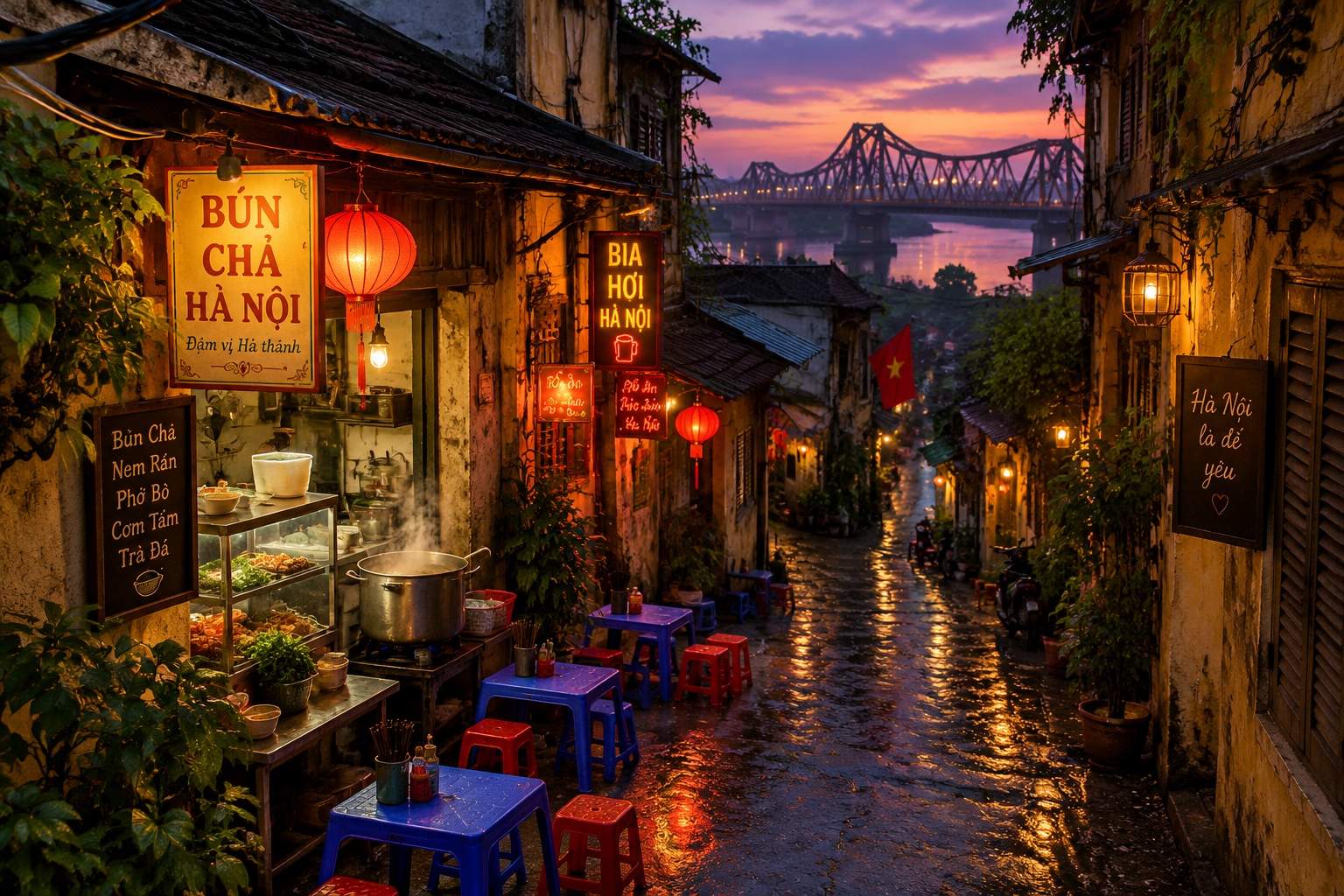
The condensation from the glass of egg coffee dripped onto my jeans as a motorbike carrying three crates of live chickens roared past, missing my tiny plastic stool by an inch. In this corner of the Truc Bach neighborhood, the air smells like charcoal smoke and star anise, a far cry from the sanitized hotel lobbies three blocks away. There is a specific kind of rhythm here that you miss if you spend all your time following a flag-waving tour guide. It is the sound of scissors clinking against metal bowls and the low hum of gossip over 30-cent glasses of draft beer.
Navigating Hanoi Street Food Costs Without Getting Scammed
Most people head straight to the Old Quarter and assume that paying 100,000 VND (about $4) for a bowl of Pho is a "bargain" because it is cheaper than a sandwich in London. It is not. You are paying a "clueless tax." Walk six minutes further away from the Hoan Kiem Lake, look for the place where the stools are the lowest and the fluorescent lights are the harshest, and you will find the same bowl for 35,000 VND. My friend tried to argue that the "tourist version" was cleaner, but after watching the local vendor scald her bowls in boiling water for the tenth time that morning, I told him to stop being a snob. The real financial win in Hanoi isn't just finding cheap food; it’s recognizing that the quality usually increases as the price decreases.
Why Luxury Hotels In Central Districts Are A Financial Trap
Staying right on the edge of the lake sounds romantic until you realize you are paying a 400% markup for the privilege of hearing car horns at 2 AM. Instead of the $150-a-night "boutique" spots that look identical to every other Instagram-friendly hotel, look into the French Quarter’s smaller guesthouses or apartments in the Ba Dinh district. We managed to snag a renovated high-ceilinged loft for $25 a night. The "save" here paid for a three-day excursion later in the trip. If a hotel offers you a "free" walking tour, decline it politely. They are just funneling you into their cousin’s tailor shop where you will be pressured to buy a $200 suit you don’t need.
Discovering Niche Cultural Experiences In Truc Bach And Long Bien
Forget the "Train Street" where police have to shoo tourists off the tracks every ten minutes just so someone can get a selfie. If you want a real sense of the city's scale, set an alarm for 3 AM and take a Grab bike to the Long Bien Market. It’s gritty, it’s wet, and it smells intensely of cilantro and mud, but watching the sunrise over the 100-year-old bridge while wholesalers negotiate over mounds of dragon fruit is free and infinitely more rewarding. Another neglected gem is the collective housing blocks in Kim Lien. These Soviet-style apartments are a living museum of the 1960s; the ground floors have been converted into tiny cafes where you can sit among the laundry lines and experience a side of the city that isn't for sale in a brochure.
Mastering The Art Of Local Transportation Negotiations
Taxis are the easiest way to drain your budget if you aren't careful. Always download a ride-hailing app to see the "real" price before talking to a driver on the street. I once had a driver try to charge me 200,000 VND for a ten-minute trip. I showed him the app price of 40,000 VND, and he suddenly "remembered" how the meter worked. Don't be afraid to walk away; there is always another driver ten feet behind him. For those traveling with partners, renting a scooter seems like a "main character" move, but unless you have nerves of steel and a valid local permit, the potential "fines" from local traffic stops will cost you more than a week's worth of meals.
Essential Tips For Budget Travel In Vietnam During Transition Seasons
Traveling during the humidity spikes of late spring means your clothes will never truly be dry, but it also means hotel prices plummet. Instead of complaining about the heat, do what the locals do: wake up at 5 AM, do your exploring, and then retreat to a darkened cafe or a cinema during the peak afternoon sun. The Temple of Literature is worth the small entry fee, but go forty minutes before they close. The crowds vanish, the light hits the stone turtles at a perfect angle, and you won’t have to elbow a teenager out of the way to read the inscriptions.
Stop chasing the "must-see" lists curated by people who only stay in five-star resorts and start trusting the back alleys where the real value—and the real flavor—is hidden. True luxury is having the local knowledge to spend less while experiencing ten times more than the person in the tour bus next to you.