My elbow bumped another tourist's tripod on an Oia cliffside while I paid fourteen euros for a lukewarm iced latte. A woman in a flying yellow dress stepped squarely on my canvas shoe to get her third angle of the volcanic crater. Hundreds of people squeezed along the narrow stone wall, breaking into coordinated applause the second the sun touched the waterline like they were watching a theater performance. My travel buddy turned to me, rubbed his bruised shoulder, and whispered that we were paying three hundred euros a night to sleep in a damp cave room just to get elbowed by strangers. That chaotic afternoon was the breaking point where we abandoned the hype train and booked a ferry to Naxos.
Santorini Price Trap Breakdown And Real Cost Comparison
Santorini extracts money from your wallet faster than a torn pocket. Dining near the caldera in Thira or Oia routinely runs ninety euros for two simple fish plates and a couple of beers, simply because the table faces the water. Rolling off the Blue Star Ferry onto the docks of Naxos immediately drops those inflated prices down to earth. In the mountain village of Koronos, a family tavern served us slow-roasted goat in lemon sauce, wild greens, fresh sourdough, and half a liter of local white wine for twenty-two euros total. Our quiet hotel room near Agios Georgios beach cost forty-five euros a night, featuring a balcony looking over olive groves, compared to the three-hundred-plus euro price tag for a cramped room in Fira where the bathroom ceiling forced anyone over five-foot-eight to hunch over.
How Island Ferries And Local Buses Save Hundreds
Skipping expensive private airport transfers and island flights keeps hundreds of euros in your pocket. The regional ferry system connects the Cyclades for thirty to forty euros per leg, providing comfortable deck seating with ocean breezes. Once on the island, local KTEL buses run regular routes across Naxos for roughly two euros per ticket, stopping directly at major ruins and coastal villages. Predatory taxi drivers waiting at the ports often quote fifty euros for a ten-minute drive, making public buses the ultimate financial defense mechanism for smart travelers.
Naxos Old Town Wanderings And Free Cultural Treasures
Walking past the noisy ferry pier in Naxos Town leads directly along a causeway to the Portara, a colossal 2,500-year-old marble doorway standing alone on an islet. While Santorini visitors shell out fifty euros for packed sunset boat cruises to see the horizon, standing beneath this ancient stone frame costs absolutely zero euros. You simply stroll up the rocky path, pick a flat boulder, and watch the sky shift to magenta with twenty other relaxed people scattered across the hill. Climbing into the labyrinthine alleys of the medieval Kastro district costs nothing as well, offering authentic Venetian architecture and quiet stone staircases instead of luxury designer shops selling markup resort wear.
Beyond The Beach Bars In Chalki Village
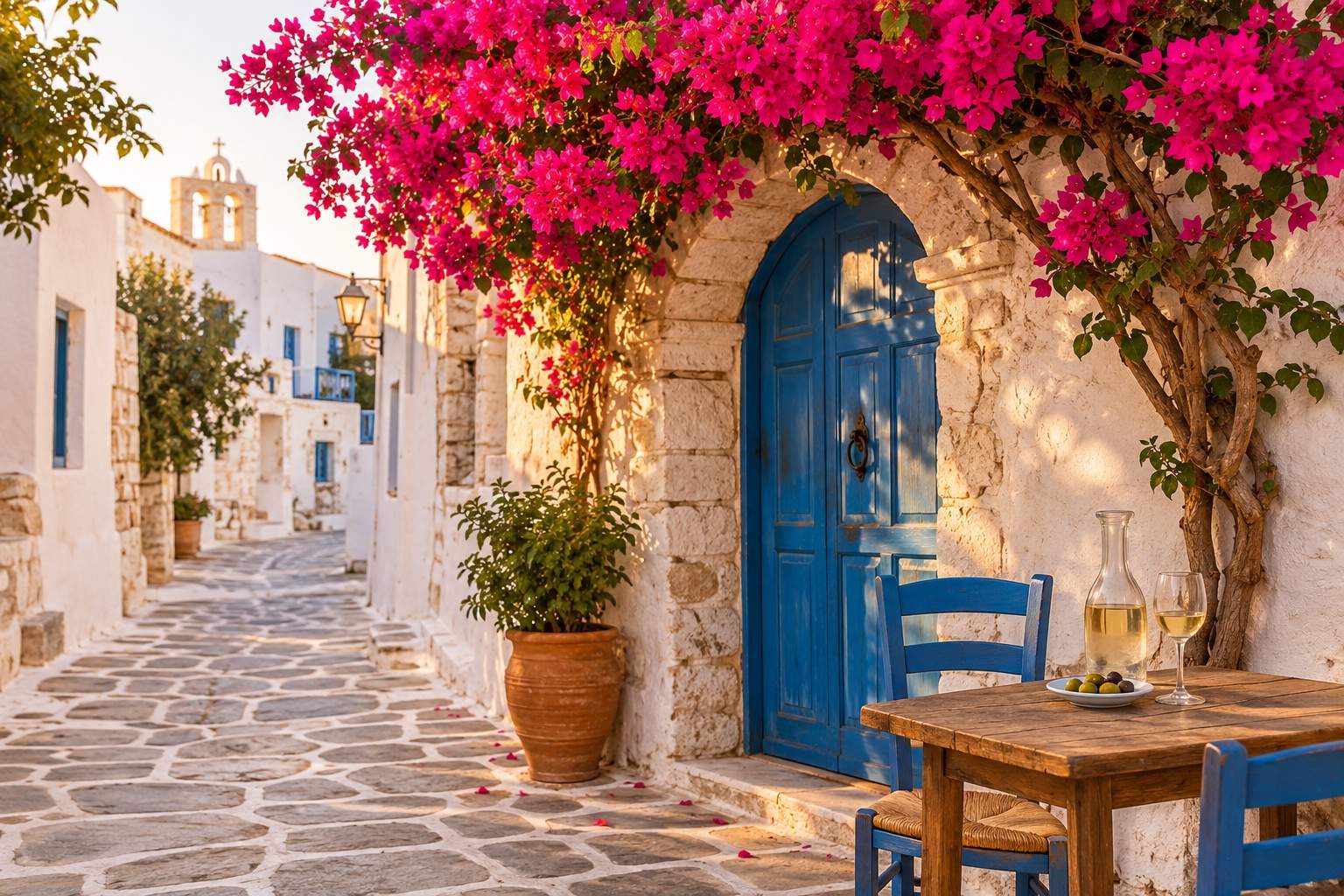
Renting a small 125cc scooter for eighteen euros a day opens up the interior mountains that big tour buses pass right by. In Chalki, a sleepy village nestled in the Tragaia valley, I wandered into Vallindras, a family distillery operating since 1896. The owner walked us past historic copper stills covered in decades of character, offered three tastings of local Kitron liqueur, and refused to charge an entry fee. A short ride further up the winding mountain road lands you in Apiranthos, a settlement built entirely of gleaming marble paving stones where local grandmothers sit on doorsteps weaving traditional textiles while cats stretch on sun-baked stairs.
Budget Dining Strategies And Avoiding Overpriced Tourist Menus
Finding authentic food requires steering clear of any restaurant with a staff member standing outside shoving glossy English menus into your face. Real local spots hide two streets back from the main port promenade, where handwritten chalkboard menus display daily catches in Greek. Ordering a four-euro gyro stuffed with seasoned pork, fresh tomatoes, tzatziki, and thick fries delivers a filling meal that beats any forty-euro tourist-trap pasta plate. Buying fresh bread, local graviera cheese, and ripe figs from small village markets turns a beach lunch into a five-euro feast.
Seasonal Survival Guide For Spring And Autumn Island Hopping
Visiting the Aegean during July and August guarantees fighting intense Meltemi winds, oppressive heat, and accommodation surges that triple room rates. Booking your island journey for May, June, September, or October cuts hotel prices in half while keeping sea temperatures warm enough for daily swimming. Packing a lightweight windbreaker protects against cool evening breezes when sitting outside at coastal tavernas. Carrying cash remains crucial in small mountain hamlets, as card terminals frequently lose cellular connection when mountain squalls roll through.
Trading crowded selfie spots for quiet marble villages proves that true travel rewards those who skip the trend traps. Pick the islands where real people actually live, and your wallet will thank you long after the tan fades.