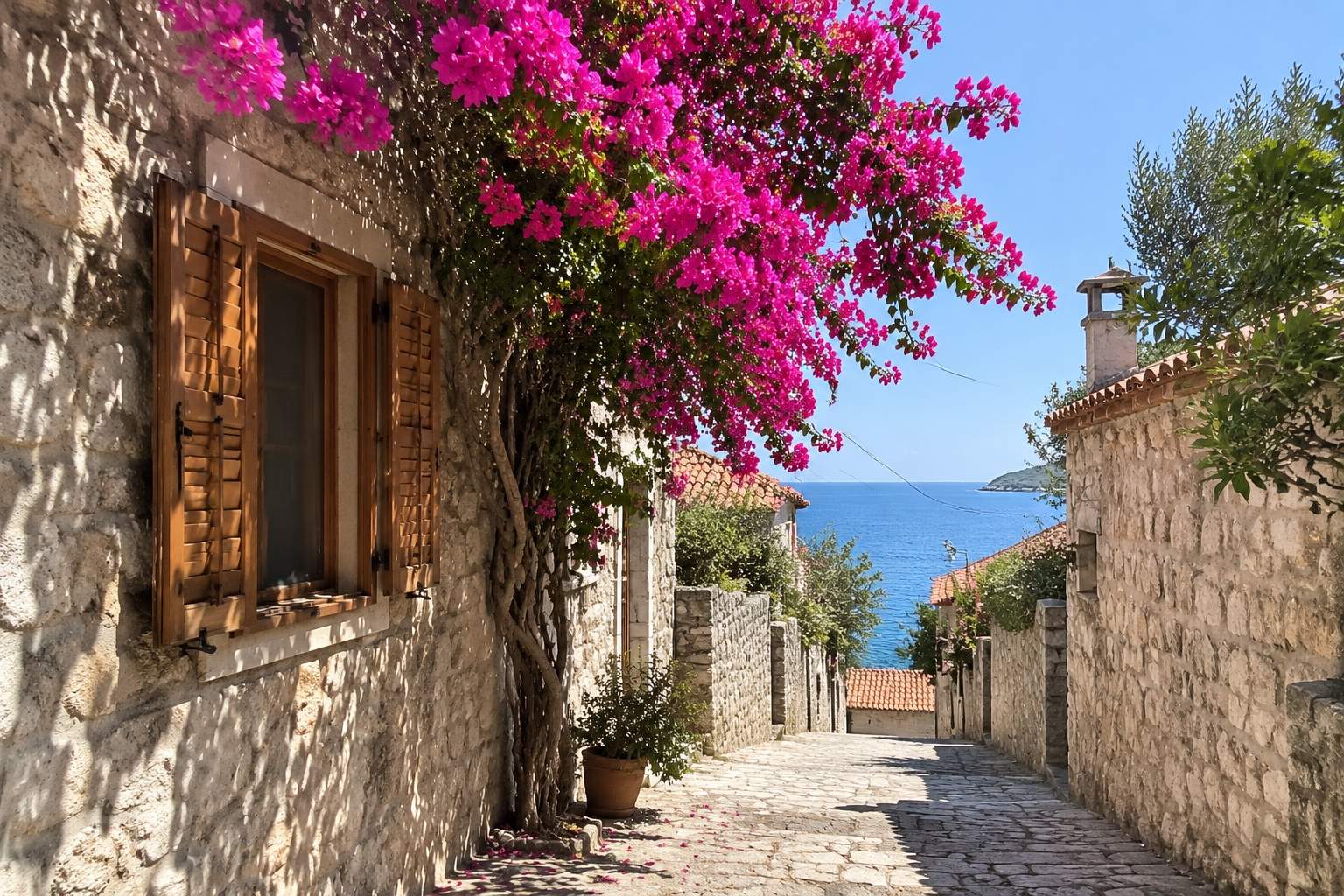
The snap of a plastic wheel on a medieval cobblestone is the official soundtrack of a ruined vacation. I stood in a "queue" in Split that was really just a sweaty huddle of humans trying to squeeze into Diocletian's Palace, only to realize I was about to pay fifteen dollars for a lukewarm Aperol Spritz that tasted like disappointment and floor cleaner. It’s the classic Mediterranean squeeze: you’re sold a dream of ancient stone and azure water, but you’re delivered a reality of cruise ship crowds and "authentic" restaurants where the calamari was definitely born in a freezer in another country. If you enjoy paying for the privilege of seeing the back of a stranger's sunburnt neck, stay in the main hubs, but my sanity—and my bank account—demanded an exit strategy.
Escaping The Dalmatian Coast Tourist Trap Strategy
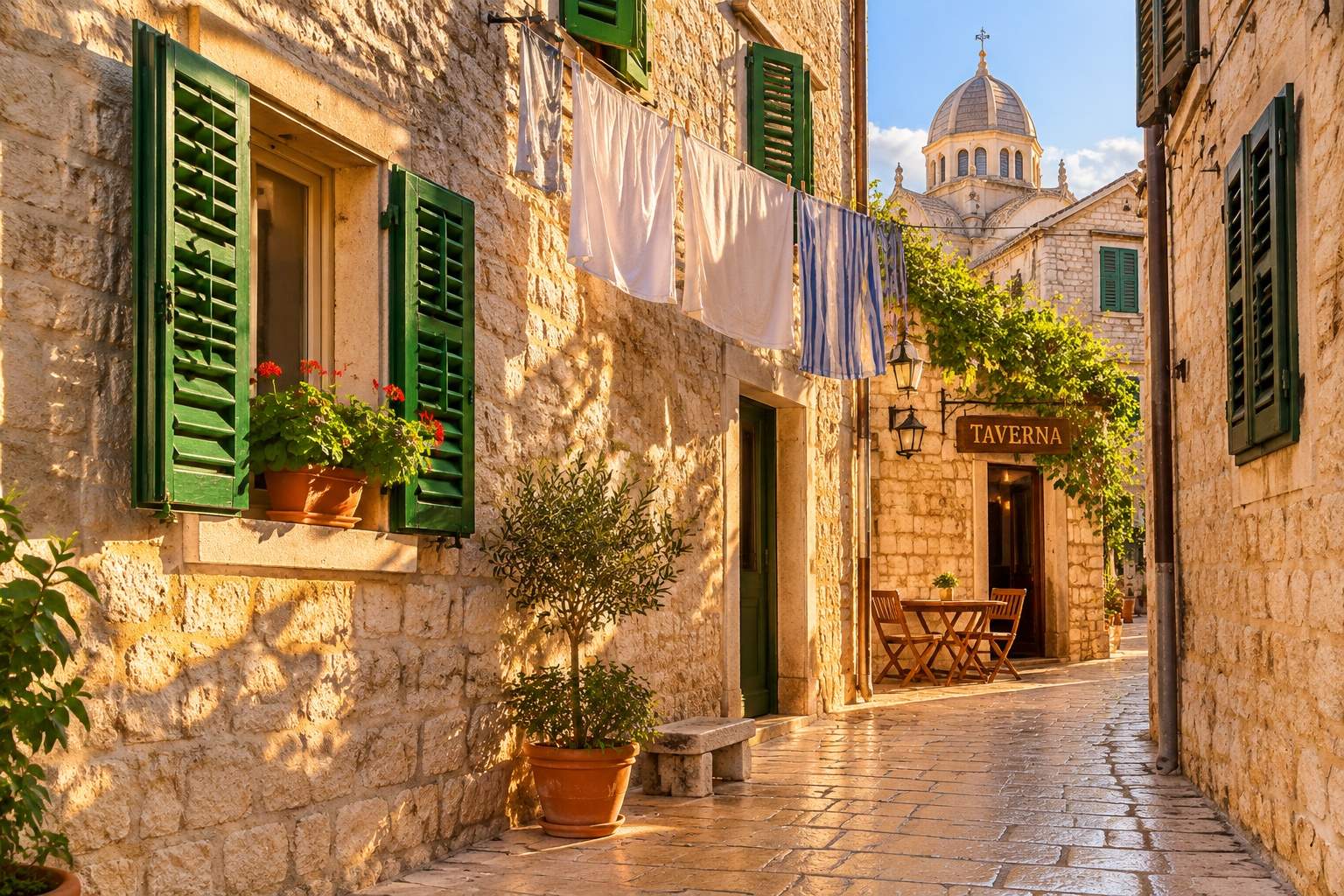
The bus ride from Split to Šibenik takes about an hour and a half, costing roughly 7 Euros if you book on a mobile app rather than getting fleeced at the station counter. While the masses are fighting for a square inch of towel space on Bacvice beach, I found myself walking through the stone labyrinth of Šibenik where the only "crowd" was a group of local grandmothers discussing the price of chard. There is a specific kind of silence here that doesn't exist in the influencer-heavy cities; it’s the sound of a city that actually lives, rather than one that just performs for tourists. I sat on a stone step near the waterfront and watched a fisherman untangle his nets for twenty minutes, and nobody tried to sell me a "Game of Thrones" walking tour for fifty bucks.
Comparing The Financial Reality Of Reverse Travel
Let’s talk numbers because "feeling the vibe" doesn't pay the rent. In Split or Dubrovnik, a basic dinner for two with a mediocre house wine will easily set you back 80 to 100 Euros. In Šibenik, I walked into a konoba (a traditional tavern) in the Dolac neighborhood and had a massive plate of black risotto, a fresh salad, and a liter of local white wine for 35 Euros. The waiter didn't try to upsell me on bottled water; he just pointed at the tap and said, "It’s better than the stuff in plastic." That is the "reverse travel" dividend: you get better quality for 40% less because the business owners still expect to see their neighbors the next day, not just a transient tourist they can burn once.
Navigating Local Transport Without Getting Scammed By Airport Taxis
Getting around this region requires a healthy dose of skepticism toward anyone holding a "Taxi" sign near a terminal. A driver at the airport tried to quote me 110 Euros to get to the Šibenik outskirts, claiming there was a "special weekend toll." I laughed, walked five minutes to the main road, and hopped on a local blue bus for less than the price of a sandwich. When you’re in these smaller cities, your feet are your best currency. The entire old town of Šibenik is a pedestrian-only zone of stairs and alleys, which means you save on Uber fees but you will definitely pay in calf-muscle soreness. If you’re traveling with family, skip the organized "island hopping" boat tours that cost 100 Euros per person; instead, take the local Jadrolinija ferry to the island of Zlarin for about 4 Euros. It’s the same sea, the same sun, but without the "party boat" speakers blasting techno.
Experience Value At St. Nicholas Fortress And The Canal
One of the most neglected spots is the St. Nicholas Fortress, a UNESCO site that sits out in the middle of the water. Most people just look at it from a distance, but taking the official boat shuttle—or better yet, walking the St. Anthony’s Channel boardwalk—gives you a panoramic view of the archipelago for the price of a coffee. I spent three hours walking that trail, encountering maybe four other people. We exchanged a nod that translated to: "We’re the only ones who know this exists, aren't we?" It’s a stark contrast to the Krka National Park nearby, which, while beautiful, is becoming a congested mess of selfie sticks. If you must go to Krka, go at 8:00 AM on a Tuesday, or don't bother going at all.
Cultural Immersion Without The Pretentious Price Tag
The real charm of "hidden" spots is the lack of a velvet rope. I spent an evening at the Medieval Mediterranean Garden of St. Lawrence. It’s a tiny, restored monastery garden that most people walk right past. For the price of a small entrance fee, I sat under a pomegranate tree and listened to the bells of St. James Cathedral. No one was shouting, no one was trying to "curate an aesthetic" for their followers. Later, I wandered into a local bakery (peara) and bought a "burek" for 2 Euros that was more filling than any 20-Euro "tasting menu" I saw in the tourist districts. To travel here is to realize that the Mediterranean dream isn't dead; it’s just moved an hour north of the places you see on postcards.
If you are planning to visit during the summer months, the heat is a physical weight. The stone buildings hold onto the sun’s warmth until 10:00 PM, so do what the locals do: vanish between 1:00 PM and 5:00 PM. Buy a cheap bottle of local Prošek wine, find a room with thick stone walls, and sleep. The city only truly opens up when the sun dips behind the islands, and that’s when the "hidden secrets" actually reveal themselves in the form of open-air rehearsals in the city squares and the smell of grilled fish wafting from private kitchen windows.
Choosing Šibenik over the high-traffic hubs isn't just about saving money; it's about reclaiming the quiet, authentic moments that modern tourism usually kills.