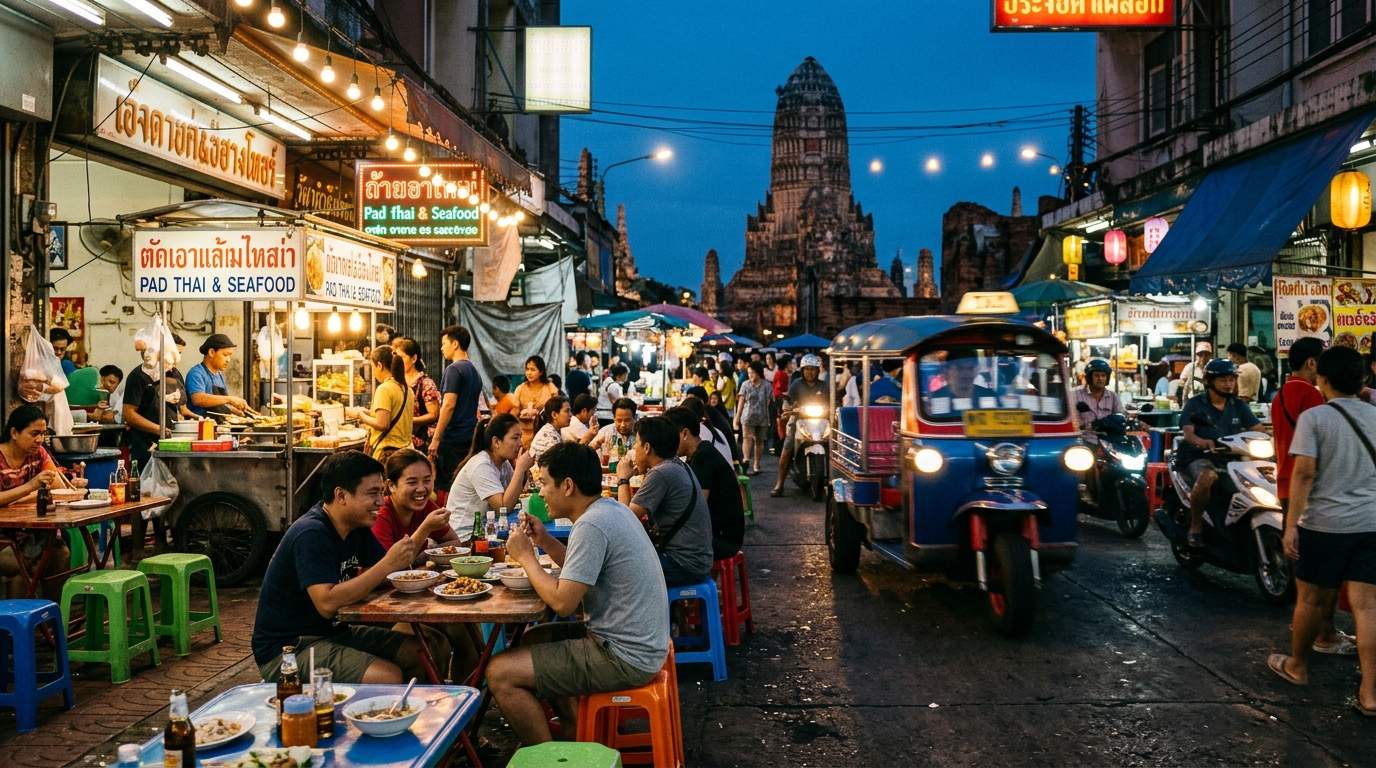
The first morning in Bangkok, I found myself clutching a ridiculously sweet iced coffee, perched on a tiny plastic stool that probably belonged to a kindergarten classroom. My friends, still rubbing sleep from their eyes, were already arguing good-naturedly over the merits of durian vs. mango sticky rice from a nearby street vendor. The air hummed with the symphony of sizzling woks, distant temple bells, and the incessant whir of motorbikes. This wasn't the polished, 'influencer-approved' Bangkok often plastered across feeds, but a gritty, vibrant alleyway that promised the true flavor of Thailand, far from the tourist-trap menus we'd expertly navigated away from just hours earlier. This trip was about finding the real deal, without getting fleeced, and trust me, there's an art to it.
Bangkok's Bustling Heart: Navigating the Tourist Tidal Wave
Arriving in Bangkok with my two best girlfriends felt like being dropped into a human-sized pinball machine. Everything was loud, fragrant, and moving at a thousand miles an hour. Our first hurdle? Escaping the airport and its overpriced taxi touts. A quick call to a ride-hailing app saved us from the 'fixed price' scam attempts, where drivers quote double the actual fare. We settled into our guesthouse in a less-hyped, local neighborhood, a wise move that immediately put us in contact with authentic street food and genuine smiles, not just souvenir salesmen. Later, wandering past Khao San Road, the infamous backpacker hub, it was a stark reminder of where we didn't want to be. The hawkers were aggressive, the 'bargains' were anything but, and a small Chang beer cost more than a full meal just two blocks away. My advice? Experience it for five minutes for the novelty, then sprint towards an actual local market.
Ditch the Crowds: Feast Like a Local on a Shoestring Budget
Our stomachs led the way, as they often do. Forget the fancy restaurants with air-con and English menus; the real magic happens curbside. I swear by Soi 38 after dark, or any nameless alley where plastic chairs spill onto the pavement. One evening, we stumbled upon a tiny stall where an elderly woman was stirring a gigantic wok. With a mix of pointing and broken Thai, we ordered Pad See Ew and green curry. The rich, smoky noodles were just 60 baht (about $1.80 USD), while the touristy places were charging upwards of 250 baht ($7.50 USD) for something far less flavorful. The mango sticky rice? A glorious 40 baht ($1.20) from a cart down the street, compared to the 150 baht we saw near a popular temple. The trick? Look for where the locals are eating. If there's a queue of Thais, join it. It's a universal sign of deliciousness and fair pricing.
Beyond Temples: Unearthing Bangkok's Unexpected Charms
During one sweltering afternoon, after politely declining yet another tuk-tuk driver's offer for a "shopping tour" (which inevitably leads to gem stores and tailor shops), we craved an escape from the Grand Palace's overwhelming crowds. We opted for Wat Saket, also known as the Golden Mount. It's a relatively easy climb up a winding, shaded path, offering panoramic views of the entire city. The sound of bells tinkling in the breeze, the quiet reverence of the few monks present, and the sheer scale of Bangkok sprawling beneath us was a truly serene experience. The entrance fee was a negligible 50 baht (about $1.50). Later, we hopped onto the Khlong Saen Saep Express Boat for a local perspective, zipping past homes and markets along the canals for mere cents. It's a raw, authentic glimpse into Bangkok life, pungent and thrilling, a far cry from expensive tourist river cruises.
Time Travel on a Budget: Discovering Ancient Sukhothai's Serenity
After a week of Bangkok's beautiful chaos with my friends, I craved something different – a deeper breath, a step back in time. My travel partner and I took an overnight bus north, arriving in Old Sukhothai, the historical heart, just as the sun began to peek over the horizon. The Sukhothai Historical Park, a UNESCO World Heritage site, is a testament to Thailand's golden age. We rented bicycles for a paltry 30 baht ($0.90 USD) for the entire day and spent hours cycling through the ancient ruins. Imagine vast, emerald green fields dotted with crumbling chedis and towering Buddha statues, all without the overwhelming crowds you'd find at, say, Angkor Wat. The main park entrance is 100 baht ($3 USD) per zone, or a comprehensive pass for 350 baht ($10.50 USD) – a steal for such an awe-inspiring site. Make sure you stay in Old Sukhothai; New Sukhothai is miles away and lacks the charm and convenience for exploring the park.
Sukhothai's Hidden Gems: Temples, Markets, and Genuine Smiles
Beyond the main historical park, Sukhothai offers even more tranquil discoveries. Wat Si Chum, with its massive, almost otherworldly seated Buddha visible only through a narrow opening, feels like stepping into a spiritual mystery. There's a quiet dignity here that encourages reflection. Another evening, we wandered through the local night market in Old Sukhothai, a world away from Bangkok's tourist-centric markets. Here, vendors sold handmade crafts and unbelievably fresh, inexpensive food to locals. I watched a woman meticulously grill skewers of marinated pork, the scent drifting through the humid air, and engaged in a simple, smiling exchange that didn't involve any aggressive sales tactics. Prices for a hearty meal were often less than 50 baht ($1.50 USD). Visiting Sukhothai during the cooler dry season (November to February) is ideal for cycling and exploring without melting.
The Ultimate Thai Escape: Maximize Baht, Minimize Buyer's Remorse
Whether you're traversing Thailand solo, with friends, or navigating the intricate demands of a family trip, avoiding tourist traps boils down to a few golden rules. Always, always confirm prices before getting into a tuk-tuk, before buying street food (though usually they're quite fair), and especially before agreeing to any 'special' tours. One local vendor, seeing us about to pay double for a small souvenir, pulled us aside and whispered the actual price, then pointed us to a stall where we could get it for a third. That's the kind of genuine connection you find off the beaten path. With my friends, we allowed ourselves one slightly fancier dinner, but the rest of our expenses were managed through local transport, street eats, and charming guesthouses – often saving us 50% or more compared to our less adventurous peers. Don't let glossy brochures dictate your itinerary; let your curiosity and a healthy dose of skepticism guide you to the genuine experiences.
Thailand offers an incredible tapestry of experiences, but its true magic lies beyond the polished facades, waiting for those brave enough to look and wise enough to listen for the whispers of local life.