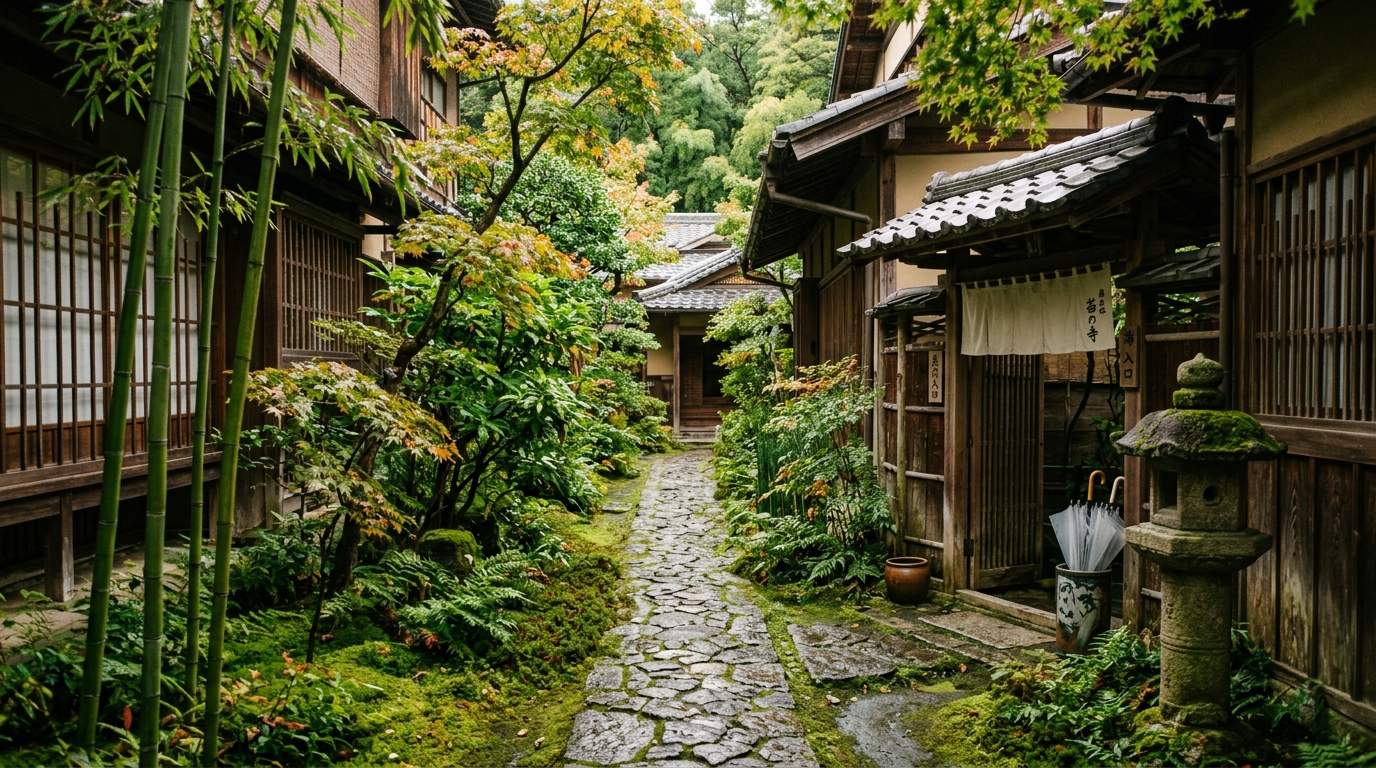
The soft rustle of bamboo leaves, a faint chime from a distant temple, and the earthy scent of moss after a morning shower. This wasn't the human conveyor belt of Arashiyama, nor the shoulder-to-shoulder shuffle of Fushimi Inari. This was a sliver of Kyoto, just past the turn where most tour buses don't go, and it held a secret I’d almost missed. A secret I wish I'd known on my first visit, when Kyoto felt like a beautiful, expensive maze of crowds.
Kyoto's Crowded Corners: What Not to Expect from Postcards
My first trip to Kyoto years ago felt like a beautifully wrapped present with a rock inside. Instagram painted a picture of serene geishas and tranquil bamboo groves. The reality? An elbow-to-elbow dance through Gion, dodging selfie sticks while a tired maiko dashed past, clearly exasperated by the persistent flashes. The famed Arashiyama bamboo path? More like a bamboo tunnel vision, unable to appreciate the height for the sheer volume of humanity. This time, traveling with my sister, a fellow 'anti-tourist-trap' enthusiast, we vowed to unlock a different Kyoto – one that offered genuine connection without emptying our wallets or sacrificing our sanity.
The Unsung Soba: A Budget Feast Near Nishiki Market
Forget the overpriced matcha parfaits lining Higashiyama, which often come with a 500% tourist markup. Our hunt for authentic, budget-friendly flavors led us down an unassuming side street near Nishiki Market, a place usually packed, but we knew better than to eat inside the main drag. We stumbled upon a tiny, family-run soba shop, its exterior so modest you’d walk past if you weren't looking. The menu was in Japanese, but a kind grandmother-figure behind the counter pointed us to the "Kyoto Kamo Nanban Soba." For a mere ¥900 (about $6.50 USD), we were served a steaming bowl of buckwheat noodles with succulent duck in a rich, comforting broth. This was a fraction of the ¥2500 tourist-menu prices for mediocre fare just blocks away. It wasn't just cheap; it was a warm hug in a bowl, a genuine taste of local life and the exact kind of culinary experience you won't find on any 'Top 10 Must-Eat' list online.
Finding Serenity: Adashino Nenbutsu-ji, Kyoto's Forgotten Souls
When my partner and I visited, we purposefully skipped the golden glitz of Kinkaku-ji and instead spent a profound afternoon at Adashino Nenbutsu-ji Temple. Tucked away in Sagano, a short bus ride from Arashiyama (but miles away in terms of crowd density), it’s a quiet memorial with thousands of stone Buddhas, each dedicated to the souls of the forgotten. The air here carries a profound stillness, punctuated only by the distant caw of a crow – a stark contrast to the thrum of mainstream sites. Entry was a modest ¥500, and we spent hours wandering the bamboo groves behind the main hall, completely alone for long stretches. It felt less like a 'sight' and more like a meditation, a shared moment of reflection that truly connected us to Kyoto's spiritual heart in a way no glittering temple ever could.
Sip Smarter: Uncorking Fushimi Sake District's Free Delights
My solo trips often lead me to the quiet corners, and Kyoto's Fushimi Sake District, usually overshadowed by the tourist magnet Fushimi Inari shrine, became my unlikely favorite. Forget the daytime crowds flocking to the main shrine. Aim for a late afternoon stroll. The old sake breweries, many still operating after centuries, exude a quiet charm that’s palpable in the cooling air. I joined a free (yes, FREE!) tasting at one of the smaller, older breweries, where they're less about aggressive selling and more about sharing their craft. A polite "Konnichiwa" and an eager smile got me a private tour and samples of sake I’d never find back home. Learning about centuries-old brewing methods directly from the master, hearing his stories, beat any packaged tour. Plus, picking up a unique bottle for ¥1500 directly from the source felt like a victory over overpriced souvenir shops.
Smart Stays & Savvy Rides: Dodging the Kyoto Price Hikes
Here’s a bitter pill, especially for my fellow female travelers: those 'charming' traditional ryokans near popular spots? They often charge double for the "authentic experience," which can sometimes mean shared bathrooms, paper-thin walls, and unexpected curfews. When my friend and I went, we found a modern Airbnb just two metro stops from Kyoto Station for half the price (¥8000/night vs. ¥16000+ for a comparable ryokan that felt more like a glorified hostel). It was clean, had private facilities, and let us allocate more of our budget to amazing food and unique experiences. Also, ditch the expensive tourist buses. Kyoto’s metro and local buses are incredibly efficient and cost-effective. Grab a ¥600 day pass for unlimited rides – it pays for itself after three trips and helps you avoid getting stuck in traffic jams when everyone else is trying to reach the same temple.
Embrace the Drizzle: Why June is Kyoto's Best-Kept Secret
Forget the cherry blossom madness or autumn leaf hysteria. My personal sweet spot for Kyoto is early June. The rainy season often deters tourists, but trust me, those gentle showers make the moss gardens glow emerald, and the air feels crisp and clean. Plus, hotel prices dip significantly – we snagged that Airbnb for almost 30% less than what it would cost during peak seasons. The crowds thin out, and you can actually hear yourself think, not just the drone of tour guides. Don't miss Byodo-in Temple in Uji, a short, pleasant train ride away. Its Phoenix Hall, depicted on the 10-yen coin, feels utterly serene amidst the less-crowded grounds. It’s a perfect day trip for a quiet afternoon, a true escape from the bustling city.
Kyoto is more than its postcards; it’s a living museum waiting to be explored beyond the velvet ropes. Ditch the crowds, save your yen, and discover the true soul of this ancient city.