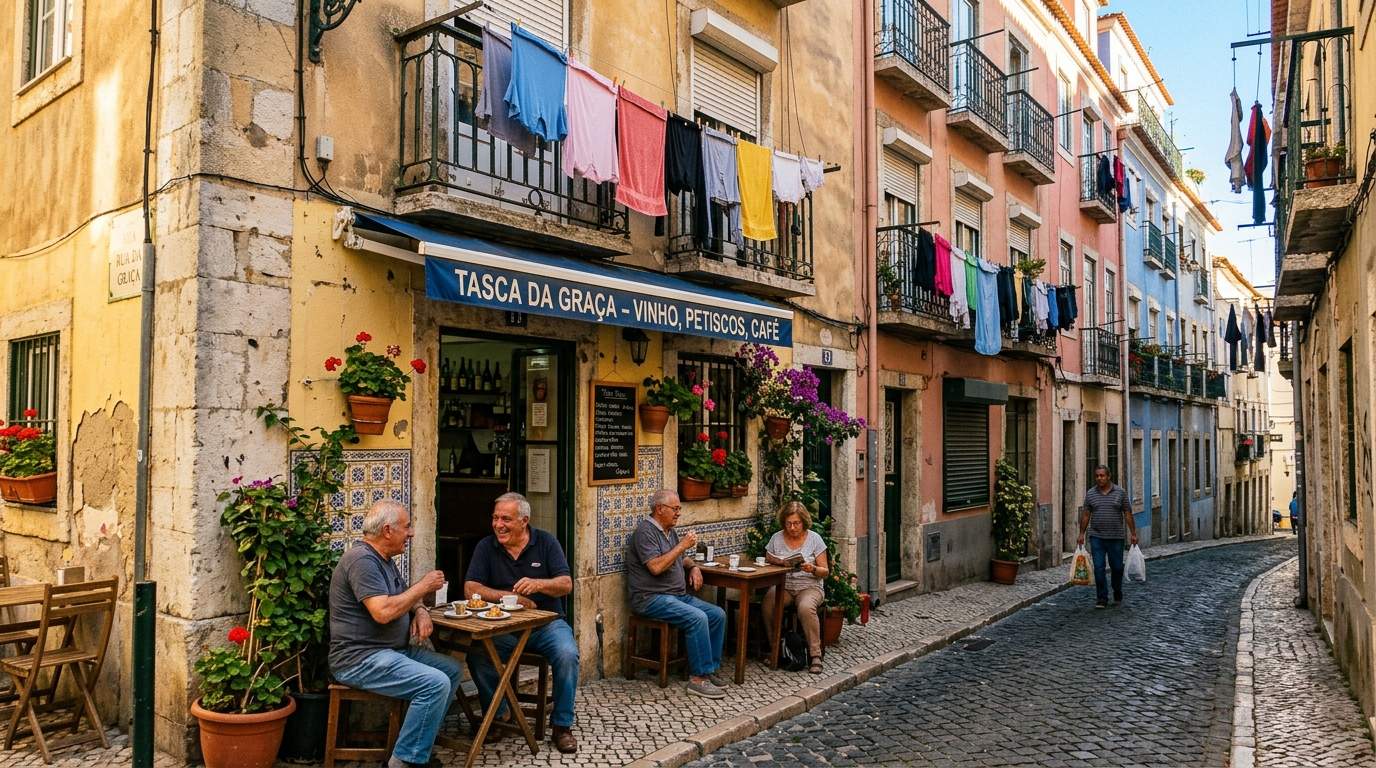
The air was thick with the scent of grilling sardines and laundry detergent, a symphony far richer than any Fado performance you'd pay €50 for. My friend Ana nudged me, "See? This is the real Lisbon." We were tucked away on a cobblestone side street in Alfama, far from the selfie sticks clogging the main arteries, sipping local wine from chipped glasses. The tourist-laden Tram 28 clattered distantly, a mere echo. Most visitors swarm the Miradouro de Santa Luzia for that iconic view, but we'd found our own perch – a small, unnamed landing with just two elderly men playing cards, offering a surprisingly more expansive and utterly unbothered panorama of the Tagus. This, my friends, is where the "authentic" begins, and where your wallet breathes a sigh of relief.
Lisbon's Authentic Pulse: Beyond Tram 28 and Belem's Line-Up
Everyone talks about the magic of Lisbon, and sure, the pastel de nata in Belém are divine, but so is the two-hour queue. And let's not even start on the sardine-scented sardine souvenirs. My partner, Leo, and I once made the mistake of joining the masses for a photo op by the Belém Tower. The crowds were so dense, we spent more time dodging elbows than admiring the architecture. "This feels less like exploration and more like a human traffic jam," he grumbled, wiping sweat from his brow. We quickly learned: the best way to experience Lisbon's true pulse is to bypass the main tourist circuit entirely. Instead of fighting for space on a jam-packed Tram 28 (which is mostly just a slow, expensive ride through crowds anyway), grab a local bus or simply walk. Wander through the Graça district; its miradouros offer equally breathtaking views as the famous ones, but without the gauntlet of hawkers or the fight for a railing spot. We stumbled upon the Miradouro da Senhora do Monte one evening, just as the city lights began to twinkle. There were only a handful of locals and us, sharing quiet conversations and a bottle of vinho verde we'd picked up for €3. It was a million times better than any 'curated' tourist experience.
Unmasking the Tourist Tax: Savoring Lisbon's Flavors Without Overpaying
Let's talk money, because honestly, Lisbon can be a budget-traveler's dream or a wallet-draining nightmare, depending on where you eat. The tourist traps around Rossio Square or Chiado will happily charge you €18 for a generic 'bacalhau à brás' that tastes like sadness. I watched a family from the US pay €6 for a single pastel de nata at a cafe right next to the Jerónimos Monastery – a crime, I tell you! Meanwhile, my friend Maria, a local, once led me down a nondescript alley in the Mouraria district to a tiny tasca called "A Bica do Sapato" (no, not the fancy one, a different A Bica). There, we devoured grilled fresh fish, perfectly seasoned potatoes, and a glass of house wine for a grand total of €7 each. The owner, a sweet elderly woman, brought us extra bread, insisting we "eat well." The difference in quality and price was staggering. My advice? If the menu is in five languages and features glossy photos of the food, run. Seek out places with handwritten menus, or better yet, just listen for the clatter of plates and lively Portuguese chatter. And for those iconic custard tarts, a local pastelaria will charge you €1-€1.20, not €6.
Reverse Travel: Discovering Lisbon's Hidden Vistas and Untouched Culture
Beyond the well-trodden paths of Alfama, Lisbon hides treasures most tourists never find. Take the Calçada do Duque – everyone walks past it, but few venture down this steep, charming staircase adorned with tiny restaurants and incredible views. Or, ditch the crowds at São Jorge Castle and instead explore the lesser-known Castle of Peneda in Arruda dos Vinhos, just a short, cheap bus ride away. When my family visited, we spent a delightful afternoon at the National Azulejo Museum. It’s not on every tourist’s checklist, but it’s a stunning dive into Portugal’s tile-making history, housed in a former convent. The entrance fee was reasonable, and we practically had the place to ourselves, marveling at intricate designs and the sheer artistry. Afterwards, we walked through the residential streets nearby, finding a quiet park with orange trees and a playground where my younger sister happily joined local kids in a game of tag. It was a genuine interaction, far more memorable than jostling for a view of the Tagus from a crowded miradouro.
Navigating Lisbon's Charms: Smart Transit and Seasonal Secrets for Savvy Travelers
Getting around Lisbon without blowing your budget or losing your sanity is all about strategy. Forget the expensive hop-on-hop-off buses or overpriced tuk-tuks – they’re tourist traps designed to separate you from your cash. The local metro and bus system is efficient and cheap. Buy a Viva Viagem card, load it with Zapping credit, and you're golden. Each ride is around €1.50, a fraction of what a 10-minute tuk-tuk ride will cost you. My dad, initially skeptical, loved hopping on random buses just to see where they'd take us. "It's like a spontaneous city tour!" he exclaimed, pointing out bakeries and local shops we'd never have found otherwise. As for timing your visit, skip July and August unless you enjoy searing heat, sky-high prices, and shoulder-to-shoulder crowds. The shoulder seasons – April-May and September-October – are ideal. The weather is beautiful, prices are more reasonable, and you’re less likely to be stuck in a queue for half your day. We visited in late September; the days were warm enough for t-shirts, but the evenings had a crispness perfect for long walks.
Beyond the Guidebook: Engaging Lisbon with Friends, Family, and Local Flair
Some of my favorite Lisbon memories involved completely unplanned, anti-tourist moments. One afternoon with my friends, instead of heading to a fancy rooftop bar, we bought a selection of cheeses, olives, fresh bread, and a couple bottles of local wine from a small mercearia (grocery store) near our AirBnB in Estrela. We then found a quiet spot in the Jardim da Estrela, a beautiful park where locals walked their dogs and kids played. Our "picnic" cost us less than €15 for four people and offered incredible people-watching, genuine conversations, and zero tourist tax. Another time, my family and I explored the LX Factory, an old industrial area revitalized with independent shops, restaurants, and street art. While it's gaining popularity, it still feels a world away from the historic center's tourist frenzy. We browsed unique bookstores, admired local artisan crafts, and had delicious, affordable burgers from a food truck. It’s a great example of Lisbon’s dynamic, evolving culture that’s still accessible and not designed solely for foreign consumption.
Lisbon offers an incredible journey for those willing to look past the glossy brochures and listen to the city's quieter, more authentic whispers. By avoiding the obvious tourist traps, embracing local transport, and seeking out the truly local experiences, you can savor its soul without emptying your pockets. Go forth, explore, and leave the queues to the unsuspecting.