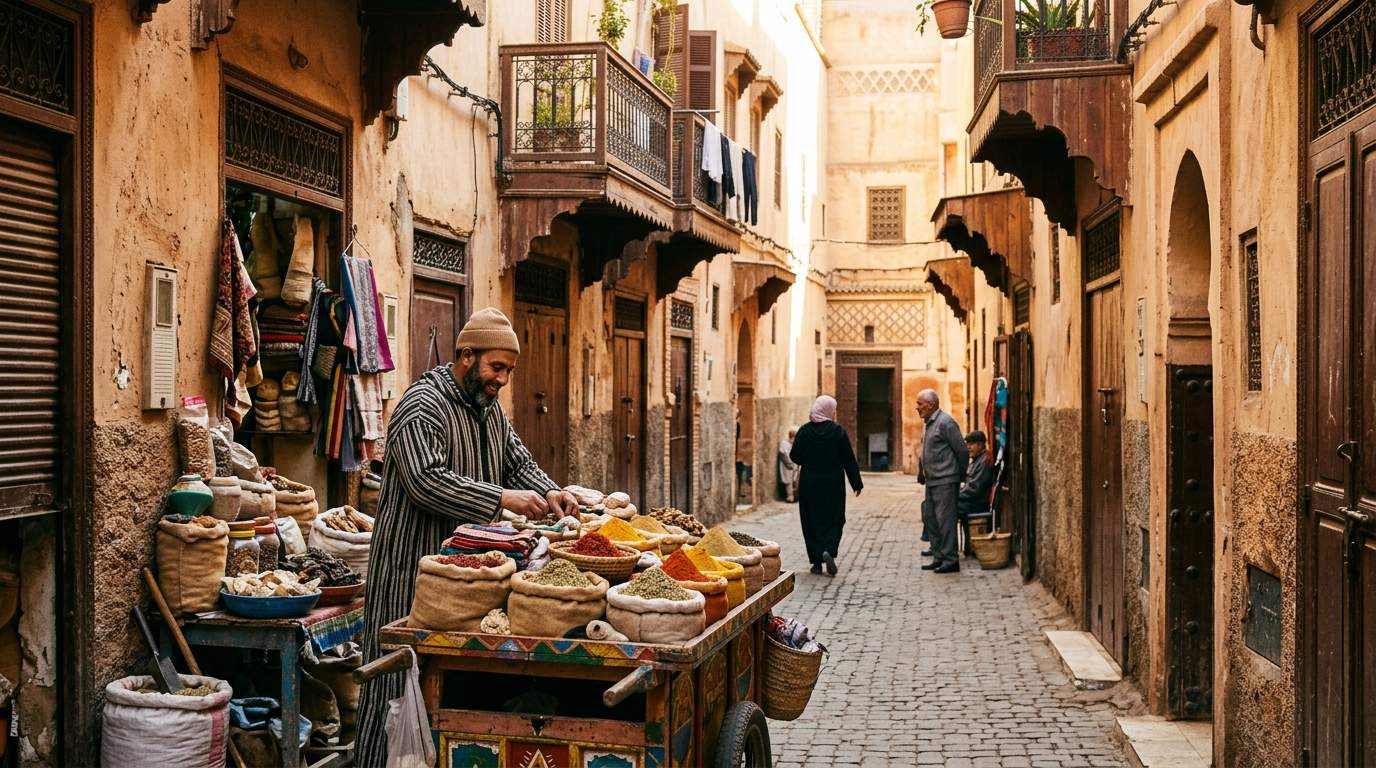
The dust motes danced in the sliver of sunlight piercing the narrow alley, illuminating a pile of freshly ground spices – cumin, turmeric, paprika – each a vibrant hillock of color and scent. Here, just a stone's throw from the relentless symphony of Djemaa el-Fna, a quiet corner of Marrakech hummed a different tune, one of ancient rhythms and genuine smiles, not the frantic dance of haggling or the drone of overpriced guided tours. This was the Marrakech I craved, the one that whispered its secrets rather than shouting them, and the one you're about to discover without emptying your wallet.
Navigating the Souks (Without Selling Your Soul) - Marrakech Shopping Secrets
My first foray into the Marrakech souks was a masterclass in how not to shop. Picture this: a wide-eyed me, genuinely charmed by a Berber rug seller, walked away with a "bargain" that, in retrospect, was about three times what a local would pay. "My friend, this is special price for you!" became the soundtrack to my early days. The truth? It was a special price for him. The game changes when you understand the local dynamic. For instance, that hand-stitched leather pouf I later bought? The initial asking price was 600 dirhams (around $60). I offered 150 dirhams ($15), walked away once, and eventually settled at 200 dirhams ($20). That’s a 66% "discount" from the tourist starting point, but probably still a good profit for the vendor. Don't be afraid to halve the initial offer, walk away, and be prepared to lose the item – often, they’ll call you back. My favorite spots are the artisan cooperatives on the periphery of the main market, where prices are often fixed or at least more transparent, and your money supports the actual craftspeople.
Feasting Like Royalty on a Pauper's Budget - Marrakech Foodie Guide
Forget the lavish riad dining experiences that charge an arm and a leg for a tagine you could replicate for a fraction. My culinary enlightenment came not from a Michelin-starred chef, but from a tiny stall tucked away down a side street off Rue Bab Doukkala. Here, for a mere 30 dirhams ($3), I devoured a hearty bowl of Tanjia, slow-cooked lamb or beef that melts in your mouth, served with khobz (local bread) hot from the communal oven. It tasted like generations of tradition, not inflated tourist prices. Compare that to the 150-200 dirhams ($15-20) you'd drop for a similar dish in a hotel restaurant, and the choice becomes clear. Look for places packed with locals – a universal sign of good, affordable food. Also, seek out independent bakeries for freshly baked pastries and harrira soup, a filling lentil soup, for just a few dirhams.
The Djemaa el-Fna: A Spectacle, Not a Supper Spot
The Djemaa el-Fna at night is an intoxicating whirl of snake charmers, storytellers, and makeshift food stalls. It's a spectacle, no doubt, but as a dinner venue, it's often a trap. One evening, emboldened by the atmosphere, my friend Mark and I sat down at stall number "X." The prices seemed reasonable on the chalkboards, but our bill for two simple skewers and some bread inexplicably soared to 250 dirhams ($25), complete with a "service charge" nobody mentioned. We debated, but the pressure was intense. Lesson learned: the food stalls are an experience to see, maybe grab a cheap orange juice, but for a satisfying, wallet-friendly meal, venture a few blocks into the side streets.
Beyond the Hordes: Marrakech's Unseen Corners - Niche Attractions
While everyone else queues for Jardin Majorelle (which is lovely, but pricey and packed), a different kind of magic awaits.
Le Jardin Secret: An Oasis of Calm
Nestled deep within the medina walls, Le Jardin Secret offers a serene escape for 70 dirhams ($7). This restored 19th-century palace boasts two distinct gardens – an exotic garden and an Islamic garden – both meticulously maintained. I spent an entire morning there, sipping mint tea on the panoramic terrace overlooking the city, listening to the gentle gurgle of water features. "It's like finding a secret library in a bustling city," I told my sister, Sarah, who appreciated the quiet beauty far more than the endless selfie-sticks at other sites. It's a true historical gem, offering insight into traditional Moroccan architecture and irrigation, without the shoulder-to-shoulder crowds.
Wander the Mellah: Marrakech's Forgotten Heart
For a truly different flavor, spend an afternoon exploring the Mellah, Marrakech's old Jewish Quarter. It's a living, breathing testament to a multicultural past, a stark contrast to the more frenetic souks. The streets here are wider, quieter, and the architecture distinctly different, with balconies overlooking the street. I stumbled upon a small, unassuming synagogue, its interior surprisingly ornate and peaceful. The silver shops here, often family-run for generations, offer unique pieces at prices often more negotiable than in the main souks. I found a delicate silver pendant for 100 dirhams ($10) after a friendly chat with the owner, who shared stories of his family's history in the quarter.
Embrace the Local Hammam: Cleanse Like a Local
Forget the fancy, overpriced tourist hammams that charge 500-800 dirhams ($50-80) for a "spa experience." To truly cleanse and connect, seek out a local hammam. These are communal bathhouses, often gender-segregated, where for a mere 10-20 dirhams ($1-2) entry, you get access to hot rooms, cold rooms, and a truly authentic Moroccan bath experience. You'll need to bring your own soap, ghassoul (clay mask), and kessa (exfoliating mitt). I remember being gently but firmly scrubbed by an elderly Moroccan woman until I felt reborn, my skin radiating. There was no English, only gestures and the warmth of genuine hospitality. It’s an experience in humility and cultural immersion that no luxury spa can replicate.
The Art of Reverse Travel: Beating the Crowds in Marrakech - Strategic Sightseeing
My trick for Marrakech is simple: become an early bird or a late owl. Most tourists emerge around 9 or 10 AM, bleary-eyed from their riads. That's your cue to be at the Bahia Palace or the Saadian Tombs right when they open. I recall arriving at Bahia Palace at 8:30 AM, practically having the sprawling courtyards to myself for the first 30 minutes. The golden morning light painted the intricate zellige tiles in hues of emerald and sapphire, a peaceful splendor before the throngs descended. Similarly, afternoons in Marrakech, particularly during the warmer months (April to October), are often best spent retreating to a quiet courtyard or riad. Traffic in the medina is mostly foot traffic, but navigating the narrow lanes when they're choked with people is exhausting. Aim for visits in shoulder seasons like spring (April-May) or autumn (September-October) for pleasant weather without the intense summer heat or peak-season crowds. A local café owner once advised me, "The best time for our market is just after Fajr prayer. You see the city wake up, not just the tourists."
The Marrakech Wallet Watch: Real Costs & Smart Saving - Budget Travel Morocco
Let's talk brass tacks. Accommodation is key. While a luxury riad can set you back hundreds, comfortable, charming riads can be found for 400-600 dirhams ($40-60) a night, especially if you book a few months in advance. For transport, taxis are plentiful but always, always agree on a price before getting in, or insist on the meter (which often "doesn't work"). A ride from the airport to the Medina should be around 70-100 dirhams ($7-10). For shorter distances, a petit taxi will charge 20-40 dirhams ($2-4). Better yet, walk everywhere within the medina – it's the best way to uncover those hidden gems. An ATM withdrawal will usually give you a better exchange rate than currency exchange offices, but always have small denominations (20, 50, 100 dirhams) for small purchases; vendors often "don't have change" for larger bills. My daily budget, excluding accommodation, hovered around $30-40, indulging in local food, a few small purchases, and entrance fees. Beware of unsolicited "guides" who offer to take you somewhere – they will always expect payment, and usually an inflated one. A polite but firm "La shukran" (no, thank you) will do the trick.
Marrakech isn't just a city; it's a sensory overload, a puzzle box waiting to be solved. By ditching the well-trodden paths and embracing local wisdom, you’ll unlock an authentic, budget-friendly journey, proving its real magic lies far beyond the tourist façade.