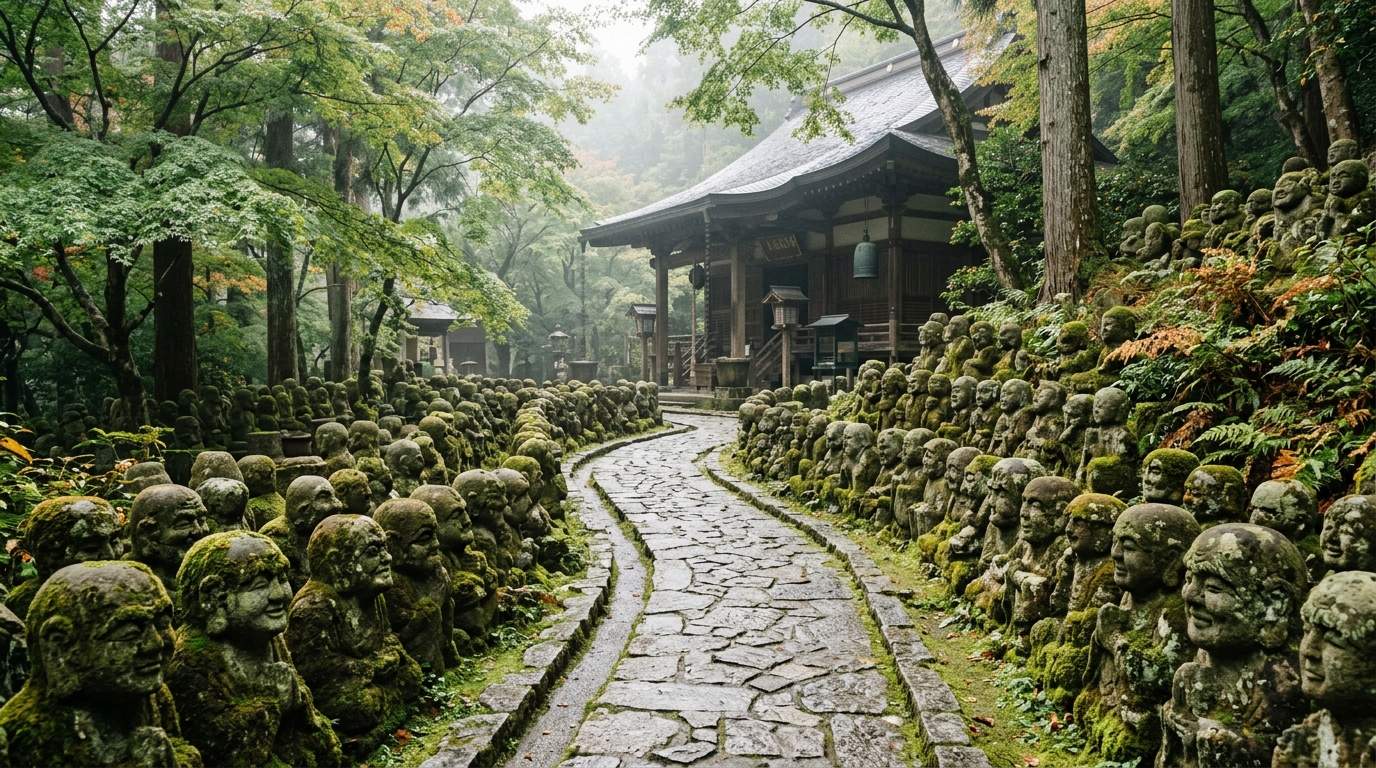
The late afternoon sun dipped below the ancient eaves of a forgotten temple, casting long, dancing shadows across hundreds of moss-covered stone figures. Each little Rakan statue, frozen in a silent, whimsical expression, seemed to hold a secret. A faint, distant bell chimed, the only sound breaking the serene quiet. This wasn't the bustling, selfie-stick-dodging Kyoto plastered across every travel guide. This was a Kyoto I'd had to hunt for, a whisper from a local I met over a ¥500 street snack, promising refuge from the tourist hurricane. And oh, did it deliver.
Beyond Arashiyama: Finding Your Zen (Without the Selfie Sticks)
Let's face it, Arashiyama Bamboo Grove is stunning in photos, but in real life, it often feels more like a conveyor belt than a tranquil path. My first visit years ago involved a frustrating hour just trying to find a gap in the human wall for a decent shot. This time, my mission was clear: reverse travel. Instead of fighting the crowds at dawn, I headed beyond Arashiyama, a short, pleasant bus ride deeper into the foothills. This is where Otagi Nenbutsu-ji Temple patiently waits, often completely overlooked. It’s a whimsical, slightly eerie wonderland of 1200 Rakan statues, each hand-carved by different amateurs and apprentices, gifted to the temple. Walking among them, seeing their unique, often hilarious expressions – one with a camera, another with a sake bottle – felt like stumbling upon a secret garden party. The ¥300 bus ride from Arashiyama (compared to tourist shuttles or overpaying for a taxi) was a steal for this level of authentic, unadulterated awe. I spent two blissful hours there, sharing the space with maybe five other people, truly connecting with the spirit of the place.
Fueling Your Adventure: Real Kyoto Flavors, Real Savings
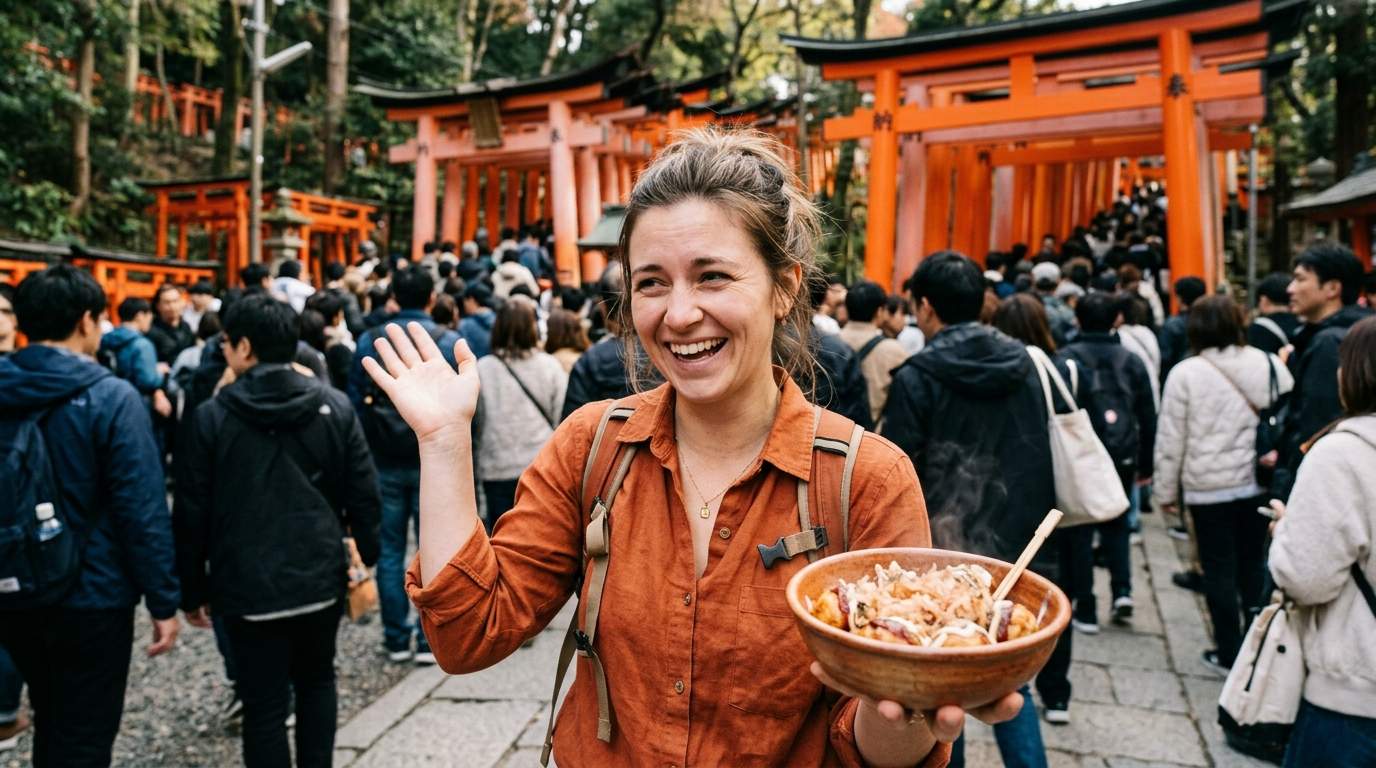
Sure, you can queue for an hour for a Michelin-starred kaiseki, or pay triple for "traditional" matcha in a tourist trap. But your wallet and taste buds deserve better. Nishiki Market, famously dubbed "Kyoto's Kitchen," has its fair share of tourist-inflated stalls, but venture off the main artery, down a narrow alley, and you’ll find the real deals. I stumbled upon a tiny, unassuming spot with just four counter seats, serving piping hot, incredibly savory bowls of kitsune udon for ¥600. The elderly woman running the place, probably for decades, chuckled when I struggled with my chopsticks. "Tourists always surprised!" she chirped. She then pointed me to a fantastic local izakaya around the corner where a huge bowl of perfectly grilled skewers and a cold beer cost me less than a single cocktail in Gion. For lunch, ditch the restaurant entirely. Grab a perfectly crafted bento box or fresh sushi from a local supermarket (think 'Fresco' or 'Life') for about ¥500-¥800, and find a spot by the Kamo River. The view is free, the air is fresh, and the food is surprisingly gourmet.
The Art of "Reverse Travel": Skipping the Main Stage
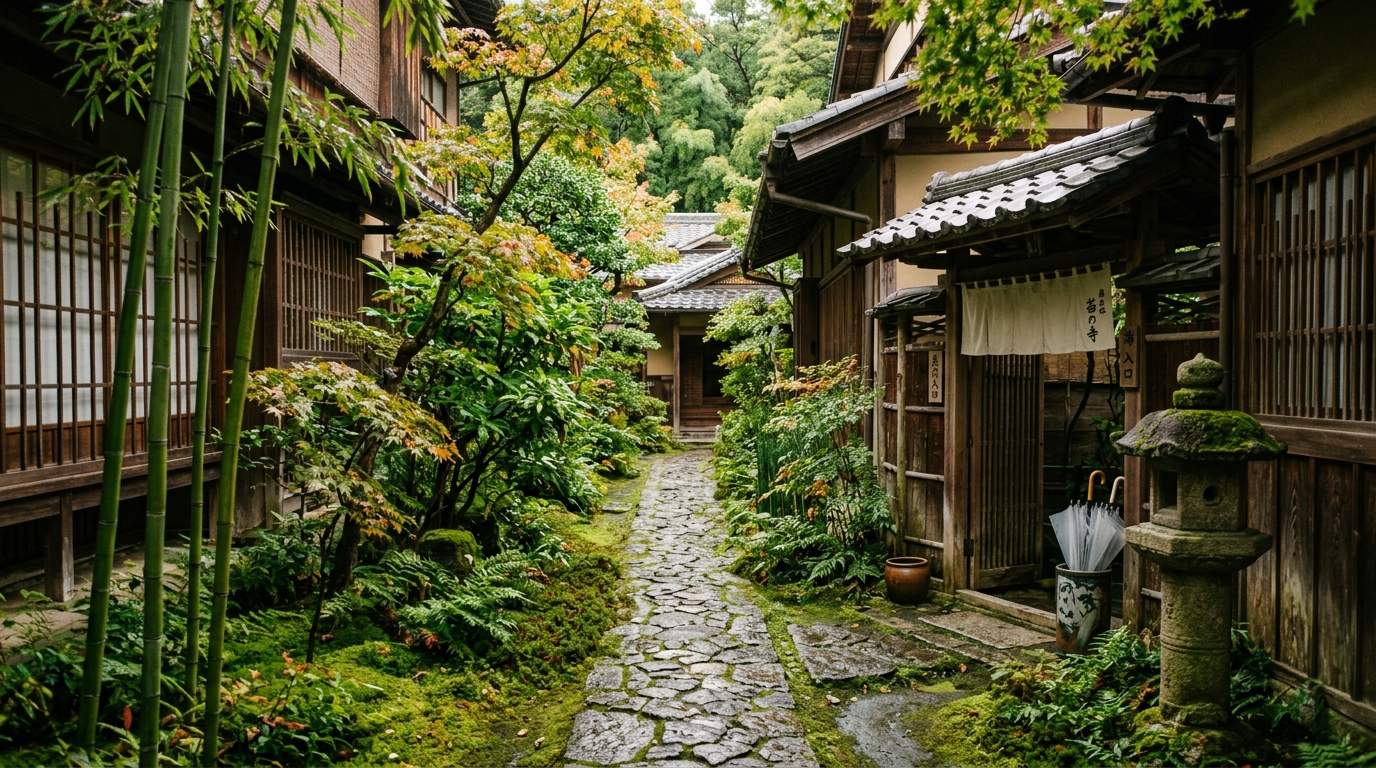
"Reverse travel" isn't just about avoiding crowds; it's about seeing a destination on its own terms, not the tourist brochure's. The Philosopher's Path is lovely, but at peak times, it's shoulder-to-shoulder. My trick? Go late. As the sun began to set, casting golden light through the maples, the masses started to thin out. Instead of sticking to the main canal, I veered off into tiny side streets, discovering quaint pottery shops and tucked-away cafes that smelled of roasted coffee beans. The real triumph, though, was a day trip to Kurama-dera and Kibune. Instead of battling for a train seat to Nara, I took the Eizan Railway from Demachiyanagi (cost: ¥420 one-way to Kurama). The journey itself, through lush valleys and quaint villages, was part of the charm. Kurama-dera is a mountain temple, a spiritual journey involving a moderate hike through ancient cedar forests. From Kurama, you can hike over the mountain to the magical village of Kibune, famous for its riverbed dining (which can be pricey) but also for its tranquil shrine and mossy paths. The hike itself is free, invigorating, and absolutely stunning, particularly when the autumn leaves are ablaze or in the quiet hush of late winter.
The Hidden Tea Ceremony: More Than Matcha
For a truly immersive experience, skip the grand, impersonal tea houses. I found a small advertisement in a local Kyoto magazine (a Japanese friend helped me translate!) for a tea ceremony held in a traditional machiya (townhouse) in a quiet residential area. This wasn't a show; it was an intimate cultural exchange. The hostess, a graceful woman named Akemi, patiently guided me through each precise movement, sharing stories of her grandmother and the philosophy behind the ritual. It cost ¥3500, a bit more than some tourist traps, but the authenticity, the quiet conversation, and the genuine warmth were priceless. It was just me and a young couple from France, a world away from the tour bus groups.
Unlocking Kyoto's Rhythms: Seasonal Savvy & Unexpected Delights
Everyone chases cherry blossoms or autumn leaves, but here’s a hot take: Kyoto in winter is a poetic masterpiece. Yes, it’s chilly, but the crowds vanish, and the city takes on a meditative quiet. Imagine Kinkaku-ji (Golden Pavilion) dusted with fresh snow – a sight few tourists ever witness, making it feel less like a postcard and more like a private art installation. My favorite winter discovery was Gio-ji Temple, a tiny, secluded moss garden often overshadowed by its flashier neighbors. In winter, the emerald moss is vibrant, framed by bare trees, creating a serene, almost mystical atmosphere. The entrance fee is ¥300, a paltry sum for such profound peace. Bundle up, grab a warm can of green tea from a vending machine, and you’ll find a Kyoto that whispers secrets instead of shouting them.
Decoding Transport: Train vs. Bus vs. Walk
Kyoto’s public transport is efficient, but often, your best bet is your own two feet, especially for discovering those "hidden secrets." Invest in an ICOCA or Suica card (available at major stations) for seamless train and bus travel; it saves fumbling for change and often offers slight discounts. For longer distances, trains are faster and less prone to traffic, but for intricate inner-city exploration, local buses reach almost everywhere. However, always check if your destination is walkable – sometimes a 20-minute stroll through a charming neighborhood is far more rewarding (and free!) than a crowded bus ride.
The Local's Playbook: Navigating Costs & Crushing Crowds
My travel philosophy isn't just about seeing things; it’s about experiencing them authentically, without breaking the bank or my spirit fighting crowds. That involves some strategic maneuvers: always research local transport options versus tourist passes (often, individual tickets or an IC card are cheaper if you're not crisscrossing the city endlessly). Embrace supermarket snacks and local eateries. And crucially, don't be afraid to ask locals for recommendations – a friendly "Otsukaresama desu!" (Thank you for your hard work!) can open doors to hidden gems. My latest budget triumph was discovering a free local festival in a neighborhood shrine, complete with street food and traditional music, simply by asking a hotel clerk where they went for fun.
Kyoto isn’t just a city of iconic temples; it’s a tapestry of subtle beauties and authentic experiences waiting for those willing to look beyond the main road, save a few yen, and embrace the unexpected.