The sun beat down, not with the usual resort-brochure warmth, but with a humid, almost oppressive intimacy as my family and I pedaled toward the ferry on a humid Tuesday morning. The kind of intimacy that makes you question why you ever thought those crowded resort beaches near Naha were "paradise." We were leaving the main island’s well-trodden paths for somewhere truly different, and already, the air felt lighter, the smiles wider, and my wallet, well, my wallet was humming a happy tune for once.
Okinawa Beyond Naha: Unveiling Japan's Island Secrets
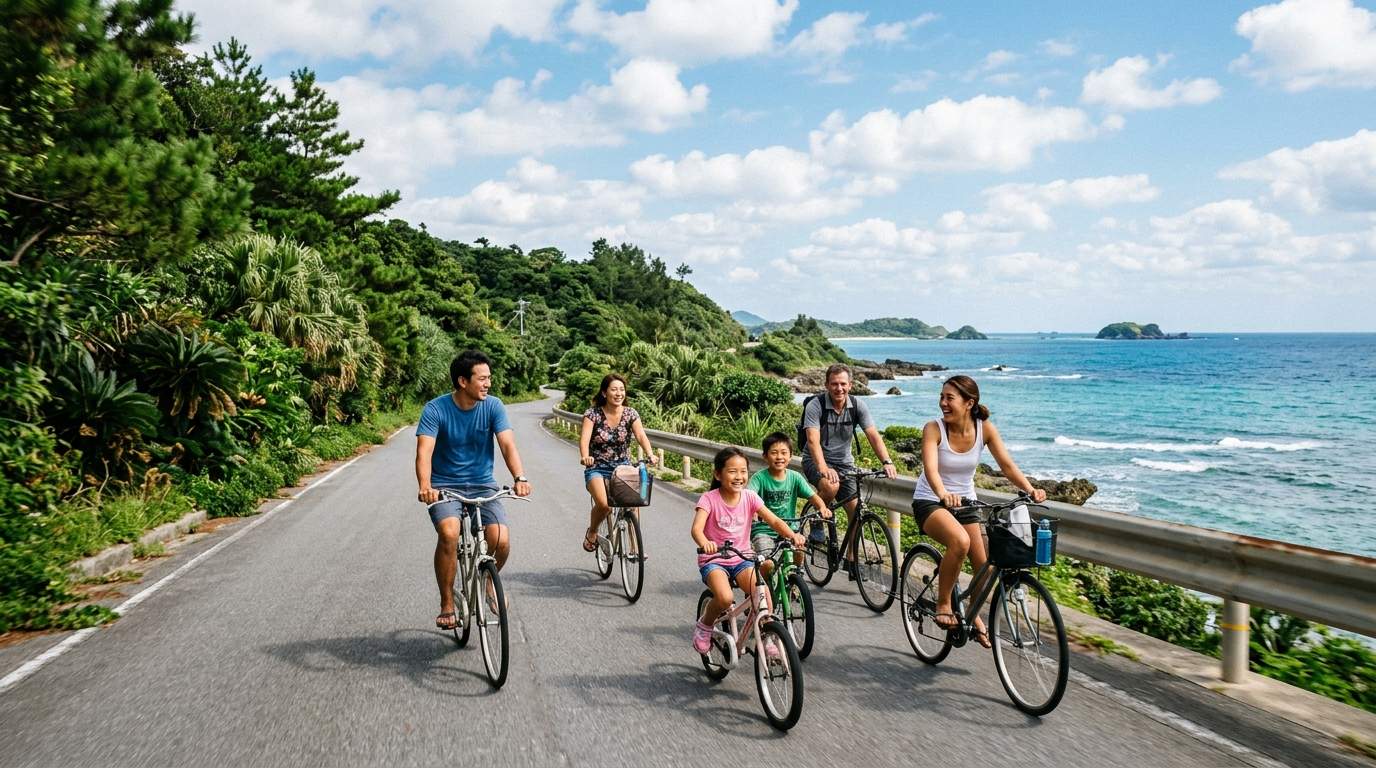
Let me tell you, if your Okinawa experience begins and ends with Kokusai Dori and a day trip to Okinawa Churaumi Aquarium (which, fine, is impressive but also packed tighter than a sardine can), you're missing out. Big time. My partner and I, along with my sister and her friend, decided on a mission: to find the real Okinawa, the one that locals brag about but never tell tourists. Our first target? Kudaka Island, also known as the "Island of the Gods." Getting there involved a short drive from Naha to Azama Port (about 40 minutes, rental car essential if you want freedom!), then a quick 15-minute ferry ride that cost us a mere 780 yen round trip per person. Forget the tourist buses; we rented bicycles on the island for 500 yen for two hours. My sister and I, admittedly not the fittest, found ourselves panting up gentle slopes, giggling as we almost collided with a stray goat – a far cry from dodging selfie sticks at Shuri Castle. This sacred island, rich in Ryukyuan mythology, felt like stepping back in time, with ancient ruins and untouched beaches where the only footprints were our own. We spent an entire afternoon exploring, breathing in history and salt air, completely alone save for a few local fishermen.
Eat Like a Local in Okinawa: Budget Bites & Authentic Flavors
Now, let's talk food, because nothing burns a hole in your pocket faster than succumbing to tourist-trap restaurants. While those fancy resort buffets might look enticing, they're often bland and overpriced. Take our lunch on Kudaka Island: a small, unassuming eatery by the port served us the freshest sashimi teishoku (set meal) I've ever had, along with mozuku (local seaweed) tempura, all for a shocking 1200 yen each. Compare that to the 3000-yen "tourist special" ramen I overheard someone complaining about back in Naha. The key? Look for places without English menus, packed with elderly locals, or where the scent of something delicious wafts enticingly from a humble doorway. Later in the trip, heading north, we stumbled upon a tiny soba shop in Ogimi Village. Here, for just 700 yen, I devoured a bowl of Okinawa soba with tender pork belly, its broth so comforting it felt like a hug. My partner, usually skeptical of hole-in-the-wall places, ended up ordering a second bowl. The friendly old lady running the place even gave us some complimentary shikuwasa (Okinawan lime) juice, a sweet gesture you won't find at any chain restaurant.
Escape the Crowds: Your Guide to Niche Okinawa Experiences
After Kudaka, we ventured further north, a move many tourists skip because "it's too far." Their loss, our gain. We drove past the bustling central areas, aiming for Cape Hedo, Okinawa's northernmost point. The drive itself was a scenic marvel, winding through lush subtropical forests. Unlike the perpetually crowded Cape Manza, Cape Hedo offers equally dramatic cliffs and crashing waves, but with hardly a soul in sight. My sister’s friend, usually glued to her phone, was mesmerized, taking genuine photos instead of posed selfies. It was free, invigorating, and absolutely breathtaking. Another standout was Mibaru Beach on the east coast. Instead of expensive snorkeling tours, we opted for a local glass-bottom boat ride that cost 1500 yen per person. It felt like a small, family-run operation. The boatman, a weathered local, pointed out vibrant coral and schools of fish with genuine enthusiasm, telling us stories about the bay. My family, including my perpetually skeptical partner, loved it. It was intimate, real, and a fraction of the cost of the larger, more commercialized tours elsewhere.
Cracking the Okinawa Budget Code: Real Costs, Real Savings
Let's get down to brass tacks: your wallet. We managed to keep our accommodation costs significantly down by opting for minshuku (Japanese-style guesthouses) and smaller, family-run hotels outside of Naha. For instance, a lovely minshuku in the northern part of the island, complete with a home-cooked Okinawan breakfast, set us back about 6000 yen per person per night. Compare that to the 15,000+ yen per night for a basic room at a mid-range hotel in Naha. Rental cars are non-negotiable for true exploration beyond the capital; ours was about 4000 yen per day, split four ways. Gas is roughly 170 yen per liter. Factor in minimal toll roads, and it’s still far cheaper than taxis or restrictive bus tours. For snacks and drinks, hit up the local supermarkets (like San-A or MaxValu) instead of convenience stores (like FamilyMart or Lawson) – the price difference for things like onigiri or yakisoba can be 30-50%. Also, skip those pricey souvenir shops near major attractions; local craft markets (if you can find them!) offer unique, handmade items at a fraction of the cost. My sister snagged a beautiful hand-dyed bingata fabric coaster for 500 yen, while similar, mass-produced items were 1500 yen at a tourist trap.
Travel Tips for Okinawa: Season Savvy & Smart Planning
Traveling in the shoulder seasons (late spring/early autumn) proved to be a masterstroke. The weather was still warm and pleasant, perfect for beach activities without the suffocating heat and typhoon risks of peak summer. Plus, fewer crowds meant better deals on accommodation and car rentals, and no interminable queues! Always carry cash, especially when exploring smaller towns or local eateries – many don't accept cards. A phrasebook or translation app can be your best friend, not just for ordering food, but for charming the locals, who genuinely appreciate the effort. And a crucial piece of advice: don't overschedule. Okinawa's true charm lies in its laid-back pace. Allow yourself to wander, to get a little lost, to strike up a conversation (even with gestures!) with a local. That's where the real magic happens, and where your memories will truly be made.
So, if you're craving an Okinawan adventure that bypasses the predictable, drains your stress, not your savings, and leaves you with stories no one else has, then ditch the guidebooks and venture beyond the familiar. Trust me, your heart and your wallet will thank you.